„Dimitrie Cupovski“ 13, 1000 Skopje +38923244000 ic@mchamber.mk
„Dimitrie Cupovski“ 13, 1000 Skopje +38923244000 ic@mchamber.mk
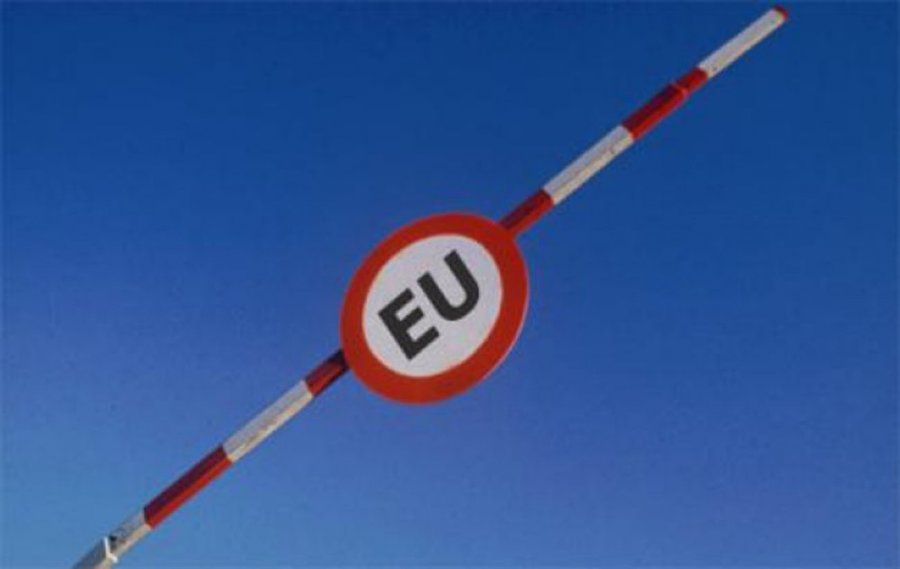
The issue related to the application of the 90/180-day rule for professional drivers in freight road transport (recording of entry and exit at border crossings in accordance with the EES system) should be addressed exclusively through institutions, and not through blockades of border crossings, in order to prevent a collapse of the entire economy in the country and the Western Balkans region as a whole. This is the position of the Economic Chamber of North Macedonia.
Blockades cannot be a solution, because if the flow of goods at EU border crossings is disrupted—even for just one day, let alone the seven days currently being announced—the losers will not be only international road transport operators, but all business entities involved in foreign trade. At this stage, no one can say precisely how large the losses will be, as they will arise on multiple grounds: penalties for delayed deliveries, contract cancellations, reduced production, unrealized exports, inability to ensure timely production due to shortages of raw materials, and so on. What is certain, however, is that the losses will be substantial, which is not in anyone’s interest.
Last week, the ECNM, together with chambers from the Western Balkans, submitted a joint appeal to the President of the European Commission, pointing out that we expect EU Member States to adopt temporary measures enabling professional drivers to carry out international road transport without hindrance until a permanent and systemic solution is established. Such an approach would be in the common interest of the European Union and the Western Balkans and would send a clear signal of credible commitment to the integration of the region and to safeguarding the functioning of supply chains. The current approach is inconsistent with the objectives of the EU Growth Plan for the Western Balkans and is difficult to reconcile with our joint efforts to further integrate the region’s economies into the EU Single Market. As candidates clearly on the path to EU membership and fully surrounded by EU borders, the economies of the Western Balkans should benefit from a simplified and differentiated application of the EES regime, reflecting their status as accession partners and clearly distinguishing them from other third countries.
In conclusion, it remains a fact that the European Union is our most important export market, accounting for more than three quarters of the country’s total exports. Therefore, it is in our strategic interest to maintain the stability of supply chains and ensure the uninterrupted flow of goods.
.jpg)



 Progressive Academy