„Dimitrie Cupovski“ 13, 1000 Skopje +38923244000 ic@mchamber.mk
„Dimitrie Cupovski“ 13, 1000 Skopje +38923244000 ic@mchamber.mk
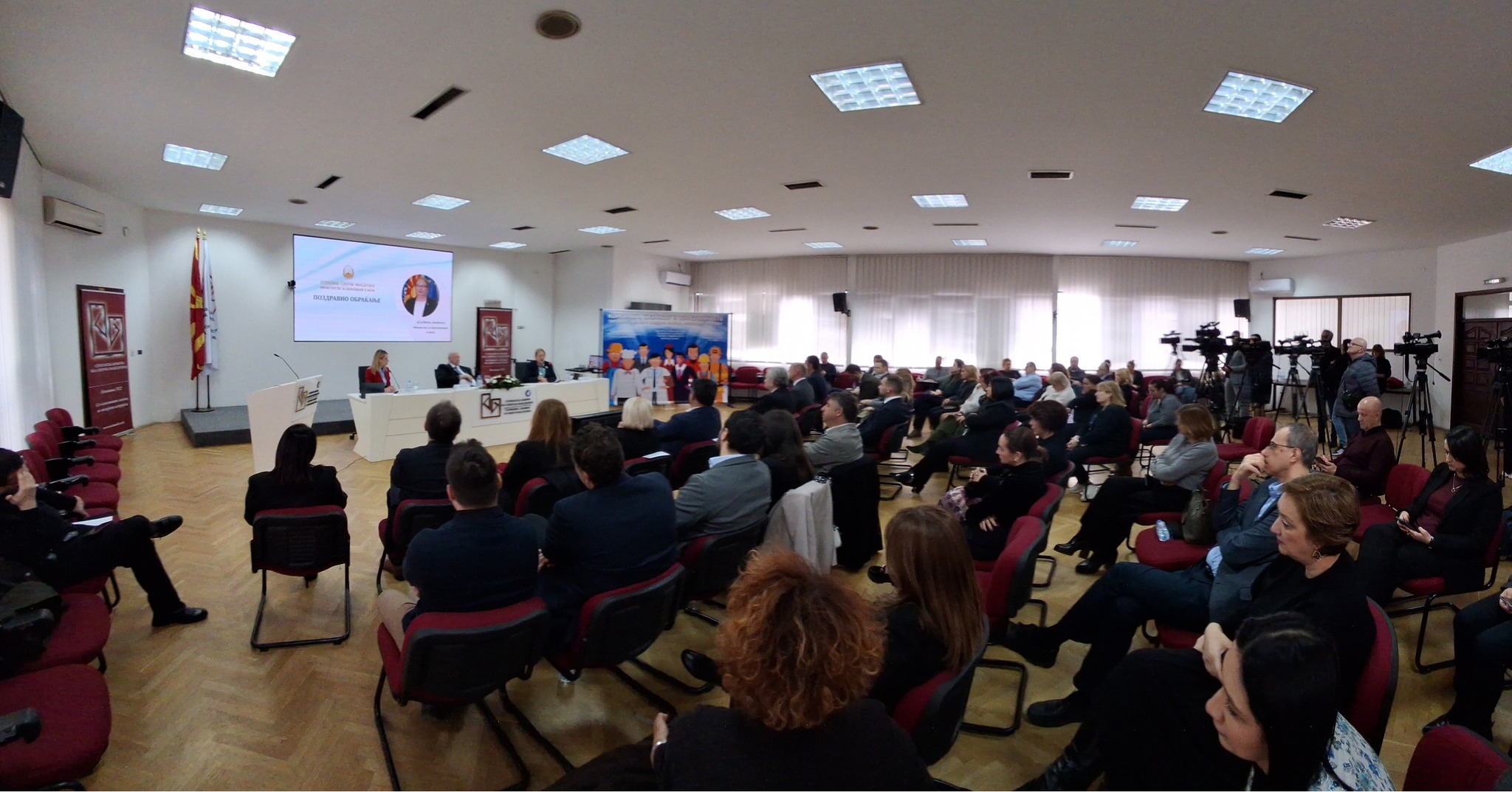
Some 11,859 students in vocational education, or 71.8%; 890 companies involved in dual education; 65 secondary vocational schools; 13,428 students enrolled in dual classes in secondary vocational schools. These are the facts with which the Chamber marks the completion of the project Education Tailored to Business, one of the three priorities on which the ECNM focuses its activities, alongside exports and regional cooperation.
.jpg)
The entire process has been defined as a “revolution in education,” as the achieved data clearly indicate that during the period of undertaken activities, reform-oriented and revolutionary steps were made, transforming the education system into one that is flexible and aligned with company needs. Only with vocationally trained workforce tailored to business requirements can companies achieve results and develop processes, thereby improving productivity and competitiveness of the economy.
The Chamber’s role in this process has been of exceptional importance, as it has worked for nearly two decades on addressing the issue of labor shortages, elevating it to a top priority, emphasized ECNM President Branko Azeski. “We achieved results and brought companies closer to working directly with schools. Although over the years there was resistance—sometimes due to lack of understanding, sometimes for other reasons—the Chamber’s role as a bridge delivered results,” said Azeski. “We accomplished what we knew we were capable of achieving. For more than 20 years, various labels have been attached to the Chamber, but with arguments and facts we proved that our sole goal is to serve business and work on their priorities. Education is one of the key priorities, and if the various crises (financial, health, energy, economic) had not occurred, it would have been the only key issue discussed,” he stated in his address at the event.
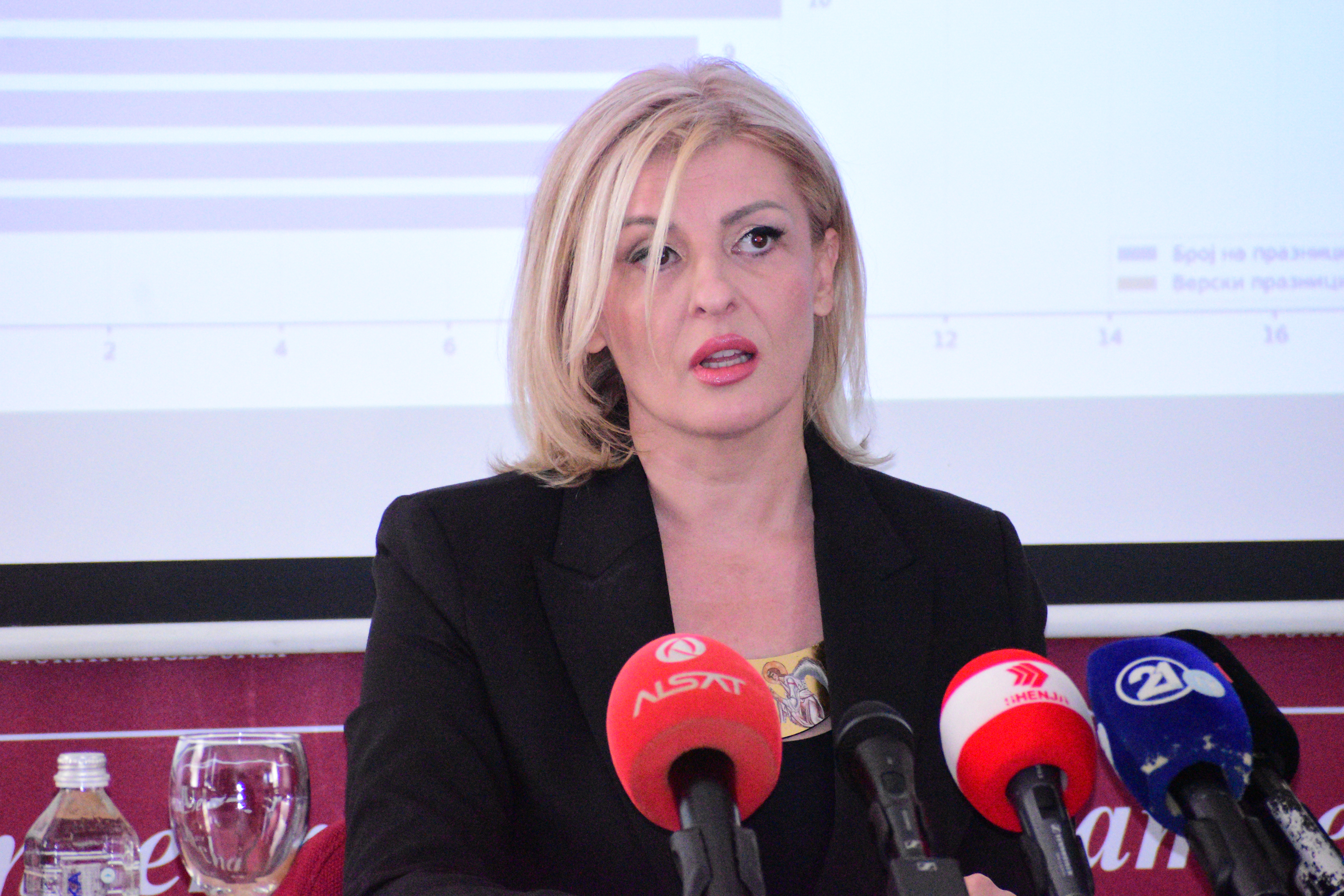
Minister of Education Dr. Vesna Janevska stated at the event that the joint commitment has borne fruit. Secondary vocational education has become the strongest link in secondary education, given that the country faces a shortage of both skilled labor and young people. Companies need a functioning model to be established. In the dual education process, she expects the number of new companies to increase. “The business community can contribute even more, observing the processes and cooperating more closely and intensively,” Minister Janevska noted.
The results of dual education have also encouraged reforms being prepared in higher education. The Minister announced the introduction of short-cycle vocational studies, which are expected to support the business community, as well as second- and third-cycle vocational studies. Efforts are underway to adapt the entire education system to the labor market, to prevent young people from continuing to emigrate if joint efforts do not ensure opportunities for both education and employment.
.jpg)
.jpg)
The beginnings of introducing vocational secondary education within the Chamber are linked to member companies of the Management Board that recognized the need for a dual education system and initiated new activities. In this context, former director of Kiro Dandaro, Dragi Miloshoski, was mentioned, who together with Natasha Janevska, MA, Advisor for Education in the Office of the Chamber President, initiated the process, which today represents one of ECNM’s ongoing daily activities. Janevska outlined the results of the Chamber’s two decades of activity through a series of conferences, press events, debates, forums, and contributions from many member companies.
During the process of ensuring education tailored to business needs, several challenges were faced, which are now in the past:
· The voice of business regarding needed skills and qualifications was not heard.
· An inflexible approach and limited cooperation from educational institutions in adopting qualifications required by businesses (new educational programs).
· Limited openness and involvement of companies in practical training.
· Rigid legislation.
· Inflexibility of inspection authorities regarding practical training within companies.
.jpg)
The discussion included directors from Liberty, Van Hool, Rade Končar TEP, Wabtec, Sasa, and Vitaminka, who through their experiences highlighted the importance of the Chamber’s role in the entire process, the persistent joint effort, and the establishment of a system of work-based learning and dual education that already provides companies with a substantial number of skilled labor.
Dr. Nikica Mojsoska-Blazhevski, Vice President of the Management Board of the Economic Chamber, concluded that cooperation between the Chamber and educational institutions continues, with an upcoming period of intensive activities to formulate vocational studies in higher education as well.
Honoring the pioneers of the dual education process in the country, President Azeski awarded recognitions to ETUC Mihajlo Pupin Skopje as the first school with a dual class, and to EVN Macedonia AD as a company that included 20 students in the dual education process as a pilot project.
.jpg)
.jpg)
.jpg)



 Progressive Academy