„Dimitrie Cupovski“ 13, 1000 Skopje +38923244000 ic@mchamber.mk
„Dimitrie Cupovski“ 13, 1000 Skopje +38923244000 ic@mchamber.mk
.jpg)
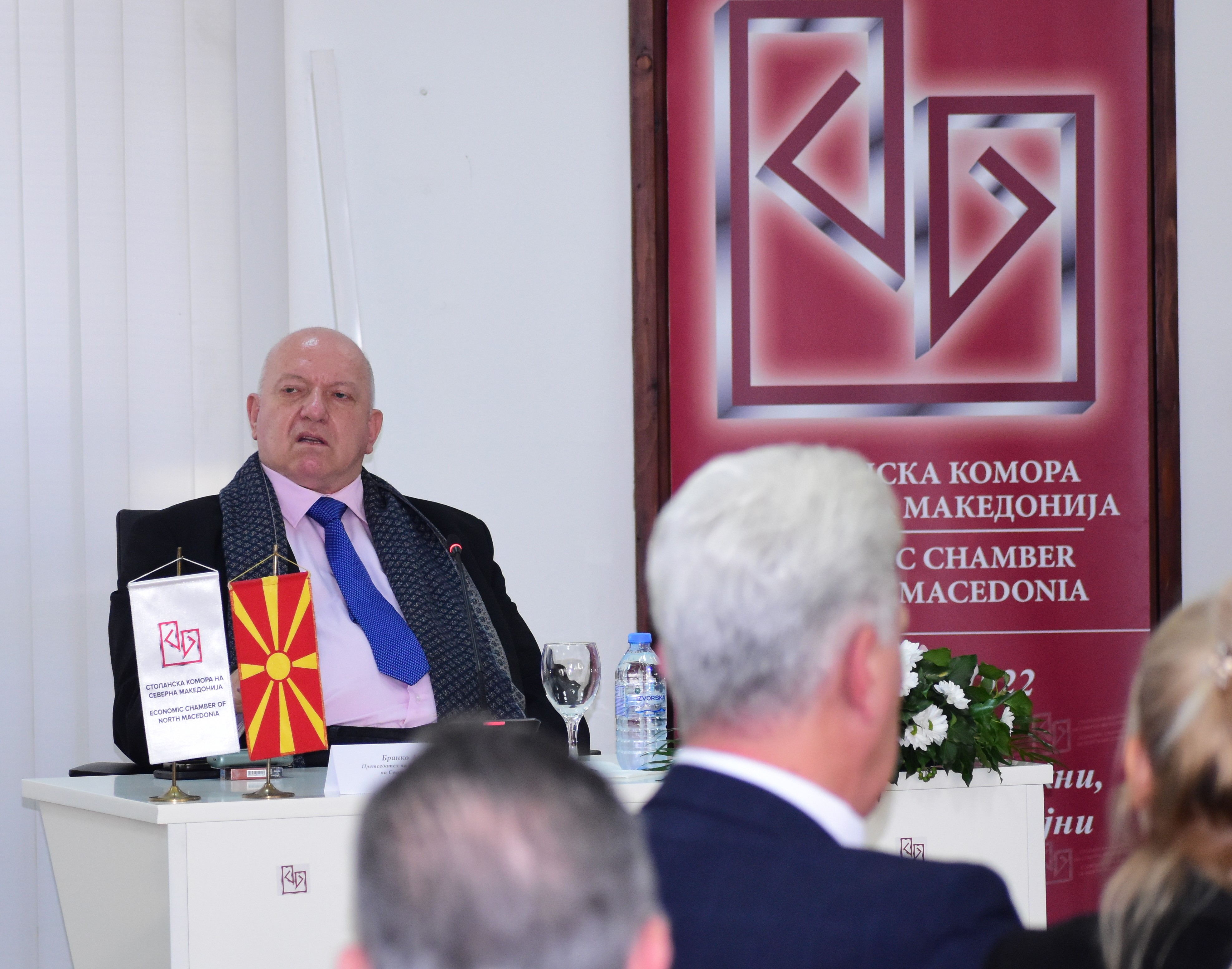


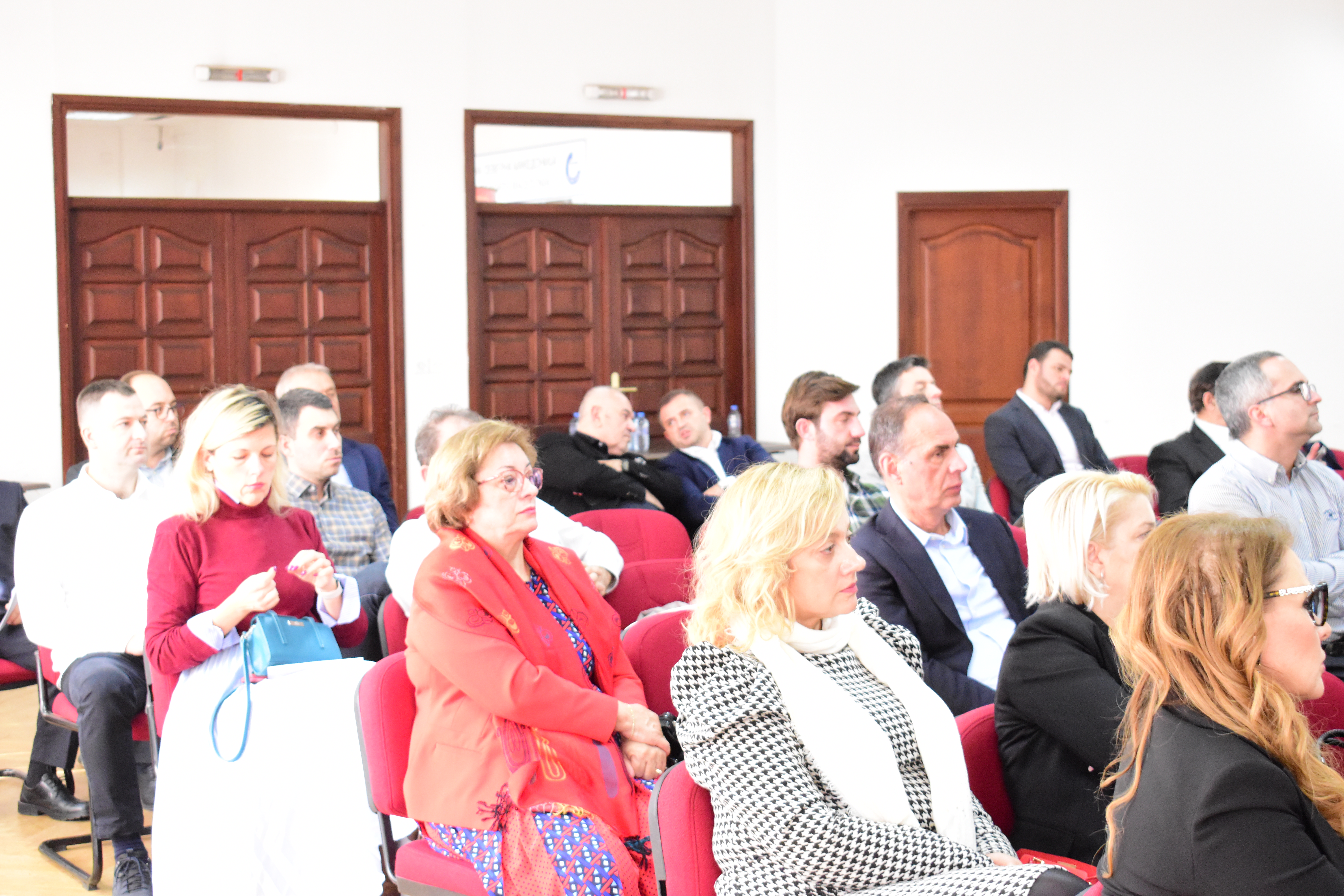
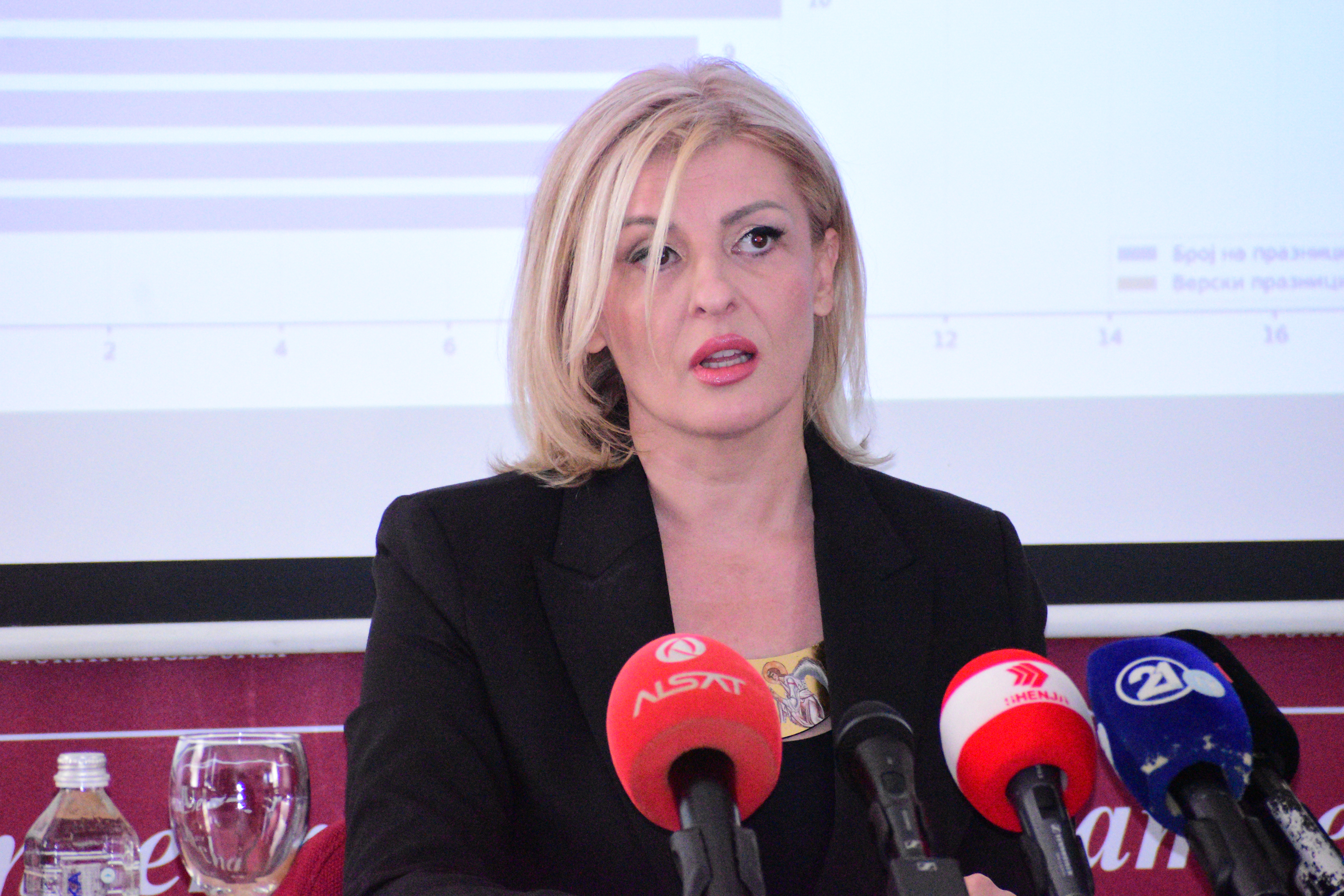
At the Economic Chamber, business leaders and company representatives serving on the Chamber’s bodies were briefed through a panel discussion on the key points of the National Development Strategy 2024–2044, including the priorities and future actions of the country’s economic policy-makers.
The event was opened by the President of the Chamber, Branko Azeski, who conveyed several messages to attendees. The Strategy, he noted, is a key document that defines the country’s development trajectory. From a business standpoint, he expressed gratitude to UNDP as the international organization that continuously supported the Strategy’s preparation, as well as to the Government for its role as a partner in public–private dialogue, and to the academia for generating knowledge and initiatives in the interest of the economy and the business sector.
In a context of major geopolitical realignments, economic uncertainty in Europe—towards which Macedonian economy is predominantly oriented—and regional cooperation in the Western Balkans that still falls short of needed levels, the National Strategy serves as the platform through which all stakeholders can jointly contribute to creating processes and measures that will drive the country’s economic growth and development despite obstacles and challenges.
One thing is certain, said President Azeski: there is national consensus that the priorities must include combating corruption and the grey economy, operationalizing the gas pipeline system, obtaining state support for exports, and ensuring an independent judiciary capable of sustaining market-based economic conditions.
Serving as moderator, Zoran Jovanovski, MA, Advisor in the Office of the President of the Economic Chamber for macroeconomics and public finance, noted that this strategic document represents a “second chance” for Macedonia and carries even greater weight because it was adopted by the national Parliament with support from all political groups. As Jovanovski explained, the National Development Strategy (NDS) will serve as a roadmap for the direction and pace of the Macedonian economy in the coming years and decades, and for the type and location of future investments.
Anna Chernyshova, Deputy Resident Representative of UNDP—the organization that supported implementation of the NDS—emphasized that the Strategy’s fundamental objective is to serve as a comprehensive strategic framework enabling a fundamental transformation of the RN Macedonia. She highlighted the inclusive approach to developing the methodological framework and consultation process for identifying strategic directions and priorities, noting that more than 14,000 citizens participated in 35 visionary workshops across the country. The process resulted in 24 thematic analyses across various sectors. Key findings from these analyses were consolidated by the Macedonian Academy of Sciences and Arts (MANU) in the report “National Development Strategy – Conditions and Challenges.” The report outlines the current situation and identifies numerous challenges, weaknesses and opportunities in human capital, environment, energy, infrastructure, digitalization, social inclusion, governance, resilience, gender equality, and human rights.
Professor Aleksandar Stojkov of UKIM’s Iustinianus Primus Faculty of Law explained that the Strategy is built around three primary national development goals:
1. Strengthening the competitiveness of the economy through a functional and innovative ecosystem, and through the development of citizens’ knowledge, skills, inclusion, and resilience.
2. Governance models that are open, accountable, comprehensive, and capable of generating prosperity for all.
3. Social inclusion aimed at improving social, health, and education services for both citizens and businesses.
Professor Stojkov stressed that these goals are to be achieved through six key strategic pillars:
1. A sustainable, innovative, and competitive economy;
2. Sustainable local and regional development that ensures cohesion;
3. Demographic revitalization, social and cultural development;
4. A safe, secure, and resilient society;
5. Rule of law and good governance;
6. Green transformation.
Concluding the presentations, Igor Janushev, Secretary General of the Government and representative of the Strategy’s institutional lead, expressed satisfaction with the inclusive process and the fact that more than 40 members serve on the National Council overseeing its implementation. He emphasized that the document will serve as an investment roadmap for the country and that the identified potentials will begin to be promoted internationally as early as next year. To support implementation, thematic working committees have been established to address issues in specific fields. The Strategy is broad enough to allow for the creation of additional committees as needed.
Following the formal program, attending business leaders joined the discussion, highlighting several key points:
- The urgent need for a demographic analysis as a basis for economic planning, given that demographic trends are the most critical challenge affecting predictability of growth and development;
- The central importance of digitalization for both the economy and society as a whole;
- The need for skilled labor and the alignment of education policies with business needs;
- The need to prioritize business intelligence over artificial intelligence;
- The low level of recognition and preparedness regarding the incoming Alpha Generation, which requires focused attention.
Participants concluded that an event of this nature—providing insights into one of the country’s key strategic documents with a focus on economic development—is of exceptional importance. They stressed the need for greater public visibility of activities related to the National Development Strategy and more active involvement of the business sector, noting that the Economic Chamber, given its size, capacity and influence, is a crucial link in the chain.
· Defines the vision, goals, priorities, and strategic areas for the development of the Republic of North Macedonia for 2024–2044;
· Was adopted by the RNM’s Assembly on 29 October 2024;
· Aims to ensure accelerated, inclusive, balanced, gender-equal, and sustainable development of the country;
· Is the result of contributions from thousands of citizens, experts, institutions, and partners;
· Reflects the country’s EU-integration commitments and obligations under the 2030 Agenda for Sustainable Development.
.jpg)




 Progressive Academy