„Dimitrie Cupovski“ 13, 1000 Skopje +38923244000 ic@mchamber.mk
„Dimitrie Cupovski“ 13, 1000 Skopje +38923244000 ic@mchamber.mk
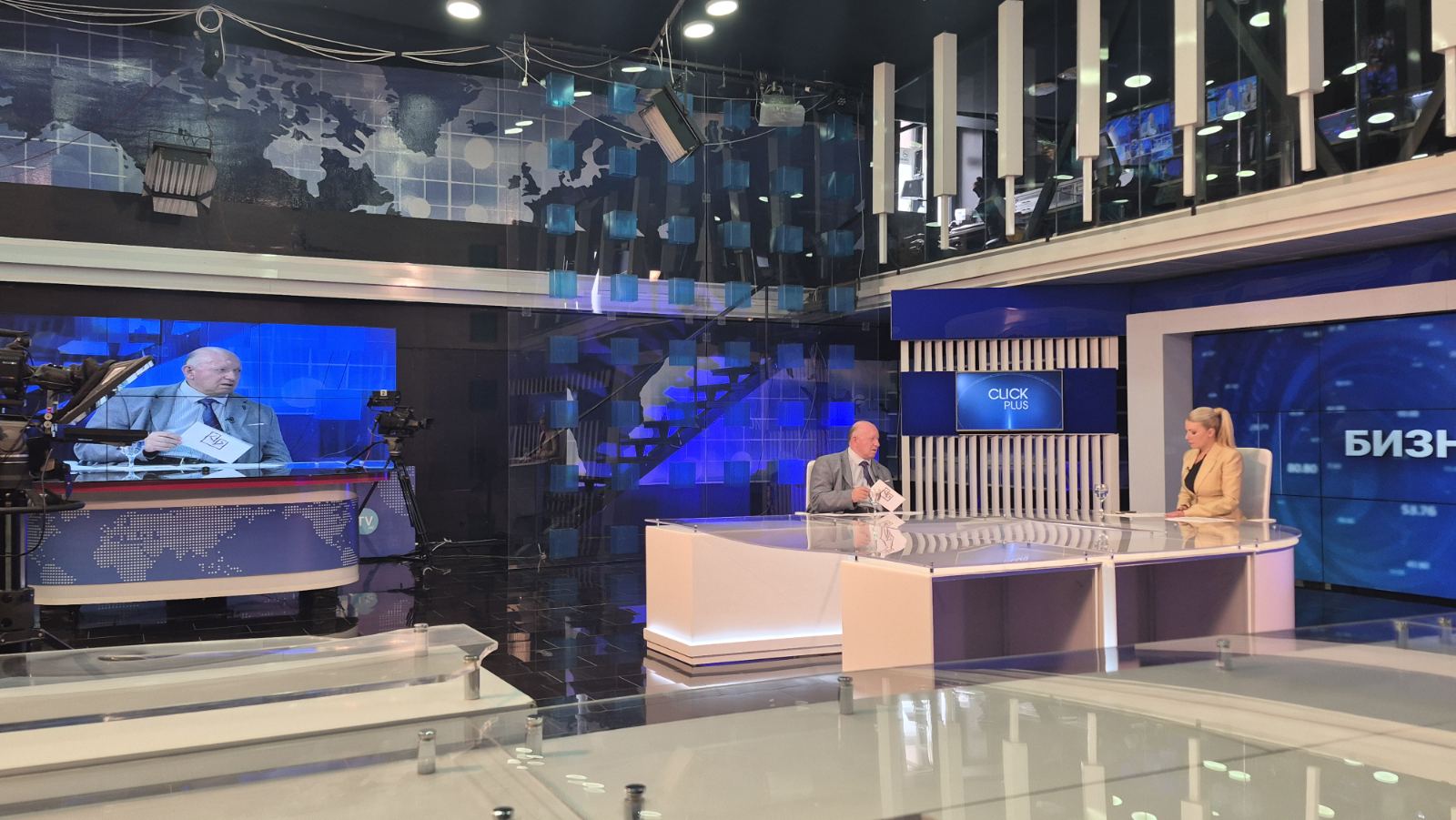
“I see crises on the geopolitical level and on the regional level. All of this creates unpredictability for business, and that is the biggest problem. A serious analysis is needed in order to identify how to act,” said the President of the Economic Chamber, Branko Azeski, in an interview for TV 21.
Azeski spoke about the sectors most affected by the current crisis, stating that these are all sectors that use oil as a driving fuel, as well as companies where transport represents a significant share of operating costs.
“We are in ongoing coordination with the Government regarding the problems and needs of the business sector. Three weeks before the beginning of the crisis, we had already started analyzing and creating activities aimed at protecting domestic companies from the impact of the oil crisis,” said the President of the Economic Chamber.
According to him, it is not advisable to reveal concrete measures in advance, because they may become subject to manipulation and fail to achieve the intended effects, specifically for those for whom they are designed. Azeski defined the global oil crisis, caused by the military actions in Iran, in three phases. “We are still in the first phase, where the effects of the crisis are being regulated through Government measures. If the crisis deepens, international borrowing will be required and the consequences for companies will be greater. And if we enter the third phase, which does not depend on us — if multiple hotspots emerge around the world — then Macedonia, as a small country with an open economy, will become collateral damage,” said the President of the Chamber.
Domestic companies are not immune to the crisis, but considering that since 2008 the crisis is continuous, only changing its form, it can be said that businesspeople have, over the course of two decades, learned how to act and are prepared to face uncertain situations on a global level. Investments are being postponed, but not halted. “We must understand that a structure of private business has already been built and there is no going back. Businesspeople cannot carry factories on their shoulders and move them outside the borders. What remains is to fight for the fundamental values — the rule of law, an effective judiciary, and the creation of an efficient public administration with a drastically lower number of employees than currently exists, as well as a reduction in the number of inefficient state institutions.”
In the interview, Azeski stated: “I see political will within the Government regarding the proposals of the business sector, but also an awareness that resolving the informal economy, corruption, and reforms in the administration is a difficult process and that time will be needed to achieve results.” Therefore, he emphasized, a national platform for the fight against corruption must be created, with measures that are neither unknown nor unique — they are universal around the world. “What is needed is an appropriate agenda in order for it to function effectively.”
The full interview of the President of the Economic Chamber, Branko Azeski, for TV 21 is available at the following link: www.youtube.com/live/UaumX-q6h7A.
.jpg)

 Progressive Academy