„Dimitrie Cupovski“ 13, 1000 Skopje +38923244000 ic@mchamber.mk
„Dimitrie Cupovski“ 13, 1000 Skopje +38923244000 ic@mchamber.mk
.jpg)
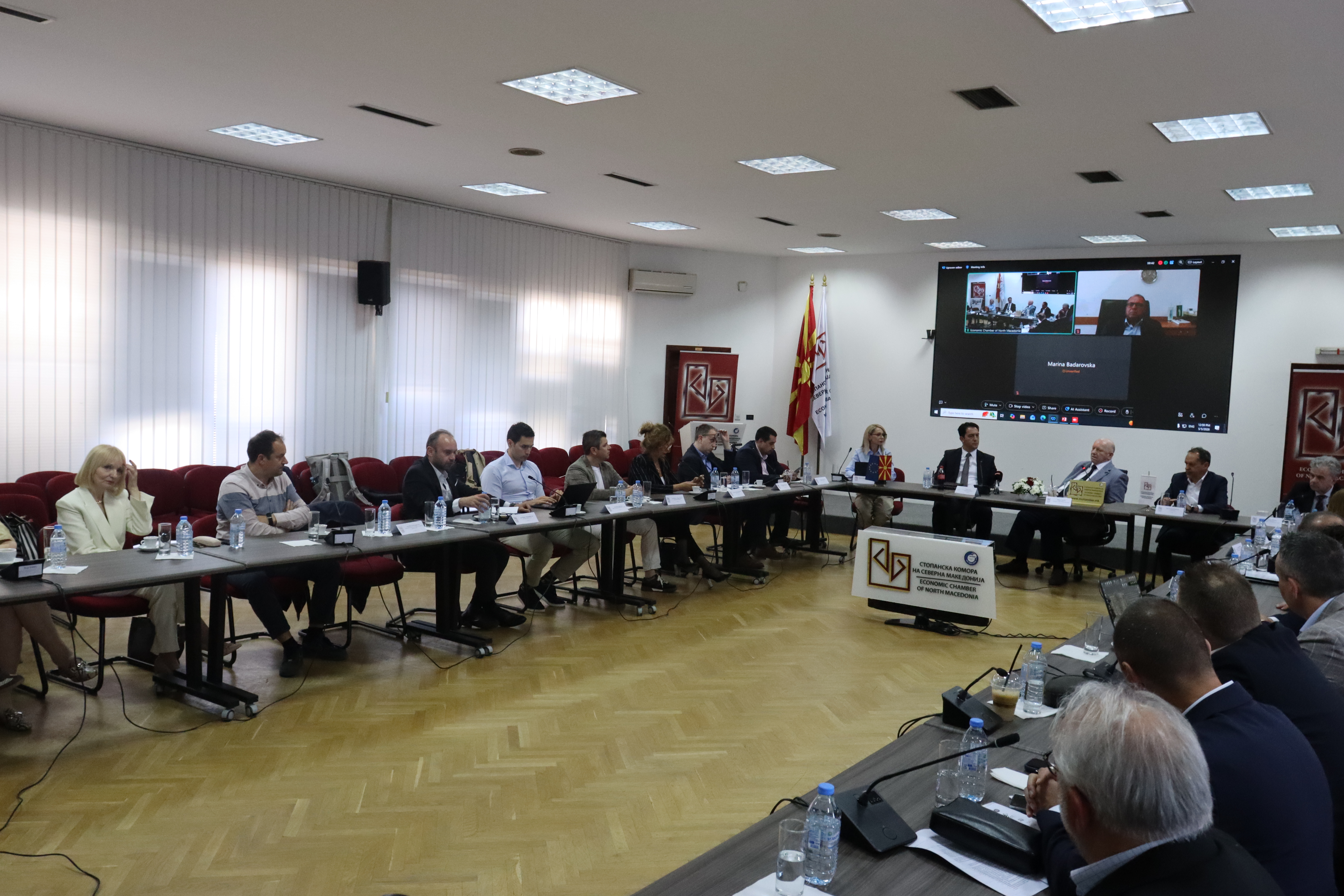
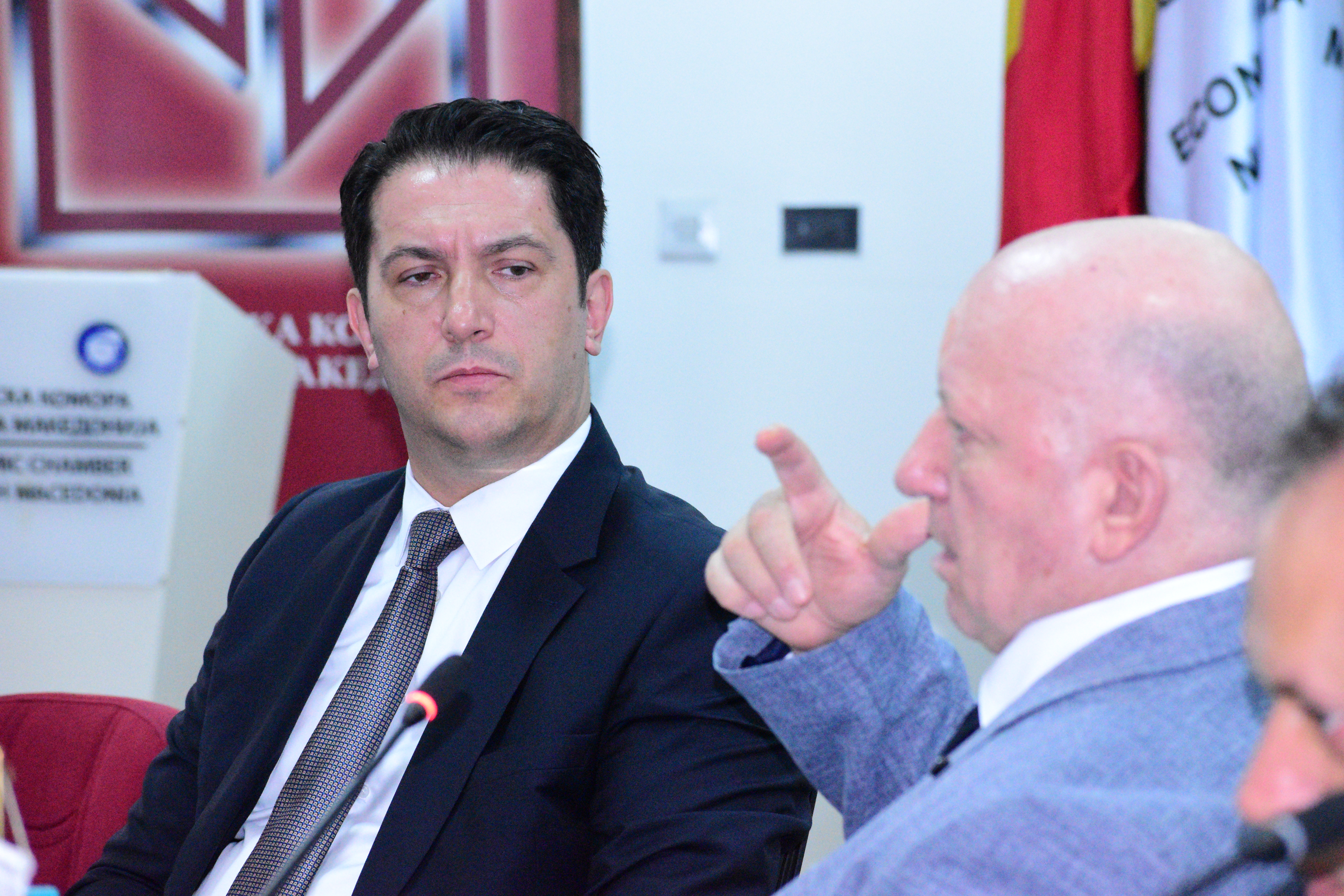
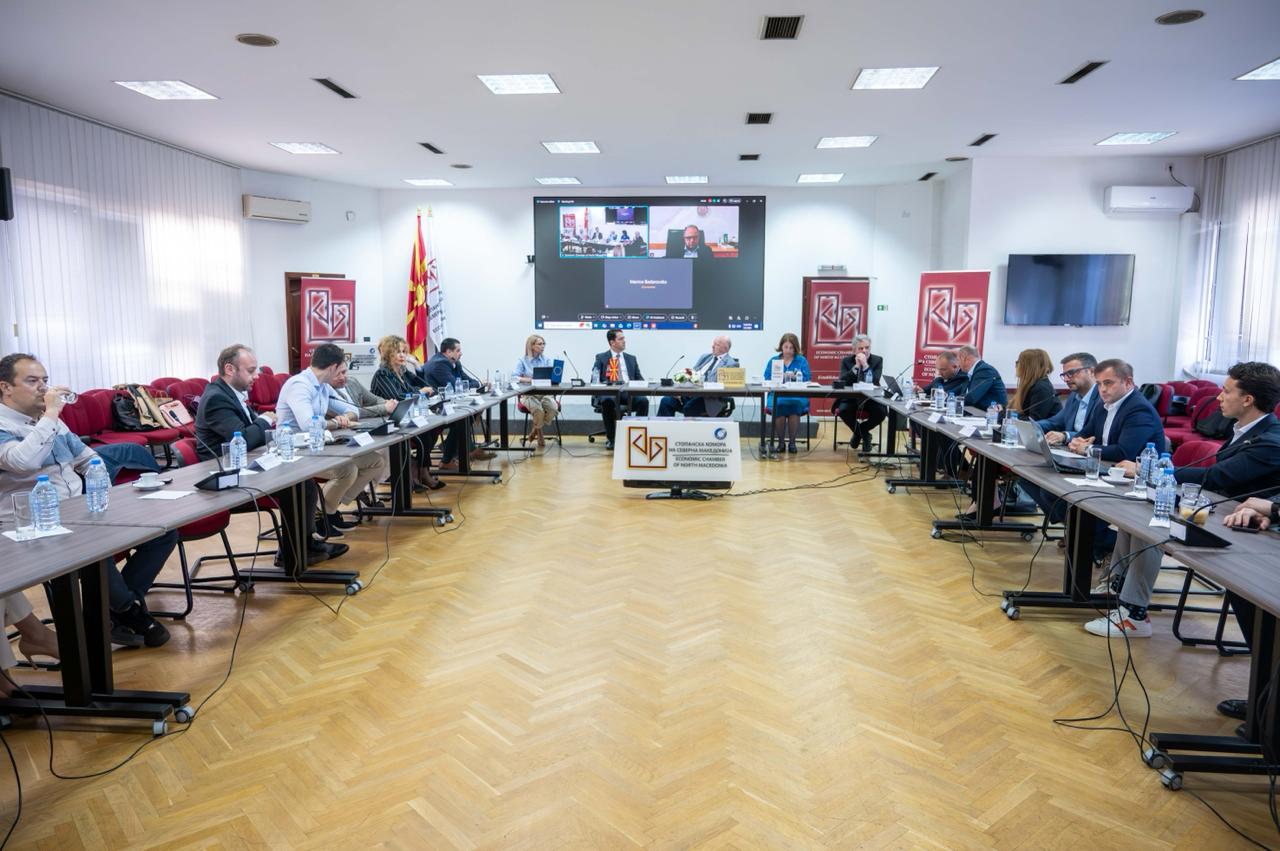
The President of the Economic Chamber of North Macedonia, Branko Azeski, hosted Deputy Prime Minister and Minister for European Affairs, Bekim Sali, at a working meeting focused on the opportunities offered by the European Union for the development and growth of the private sector.
The meeting, attended by members of the Chamber’s Management Board and the Business Club Europe, opened a discussion on the potential for utilizing EU funds intended for economic development, digitalization, green transition, and business support, as well as on open issues in economic relations with the EU.
President Azeski emphasized that domestic companies have recently faced serious challenges related to EU policies, including indirect restrictions on the movement of goods and people, announced levies on renewable energy sources, the tightening of safeguard measures for steel, and the introduction of the carbon border adjustment mechanism. Nevertheless, he stressed that the EU remains the country’s key trading partner, making further enhancement of cooperation essential, along with increased investment in infrastructure projects, particularly Corridors 8 and 10, which form the foundation for the easier functioning of the four freedoms.
Azeski underlined that “the state asks for patience, while business demands speed,” adding that meetings such as this are crucial for finding a common and balanced approach.
The President of the Business Club Europe, Gligor Cvetanov, noted that companies have high expectations regarding the opening of new accessible funds and access to new markets—not only the EU single market, but also all markets with which the EU has concluded free trade agreements—which could bring tangible benefits to businesses. He also pointed out that the Chamber remains fully available, with all its capacities, to support the state’s institutional negotiating structure by contributing the knowledge and experience of the private sector to the process.
Deputy Prime Minister Sali highlighted that the Instrument for Pre-accession Assistance – IPA III – represents one of the most significant sources of financial and technical support for North Macedonia, with over €625 million in active funds within the current programming cycle. Approximately €460 million was mobilized in the 2021–2024 period, while an additional €67 million is planned for 2025–2027.
Through the multiannual operational programs for 2024–2027, €93.3 million has been allocated for transport infrastructure, €89.3 million for environmental protection, and €49.6 million for human capital and employment. These funds are directed toward economic development, digitalization, green transition, and support for the private sector, with their effectiveness depending on the degree of absorption, particularly by small and medium-sized enterprises. He also pointed to specific steps within the Reform Agenda where private sector involvement is crucial for successful implementation.
During the discussion, participants had the opportunity to address the percentage of IPA fund utilization and the need to strengthen capacities in order to draw down more resources from available funds, enabling the delivery of infrastructure projects of interest to businesses. Other topics included the regulation of drivers’ stay in road transport within the Schengen zone, the implementation of the Entry-Exit System (EES) and the issues it creates for the right to free movement, possibilities for revising steps foreseen in the Reform Agenda, the country’s absorption capacity for available Instrument funds, the potential for drawing additional resources left unused by other Western Balkan countries, challenges arising from carbon levy calculations, the digital product passport, and the announced tightening of steel safeguard measures.
The meeting reaffirmed the shared commitment to more intensive cooperation between institutions and the business community, aimed at more effective use of EU opportunities and accelerating economic development.
.jpg)

 Progressive Academy