„Dimitrie Cupovski“ 13, 1000 Skopje +38923244000 ic@mchamber.mk
„Dimitrie Cupovski“ 13, 1000 Skopje +38923244000 ic@mchamber.mk
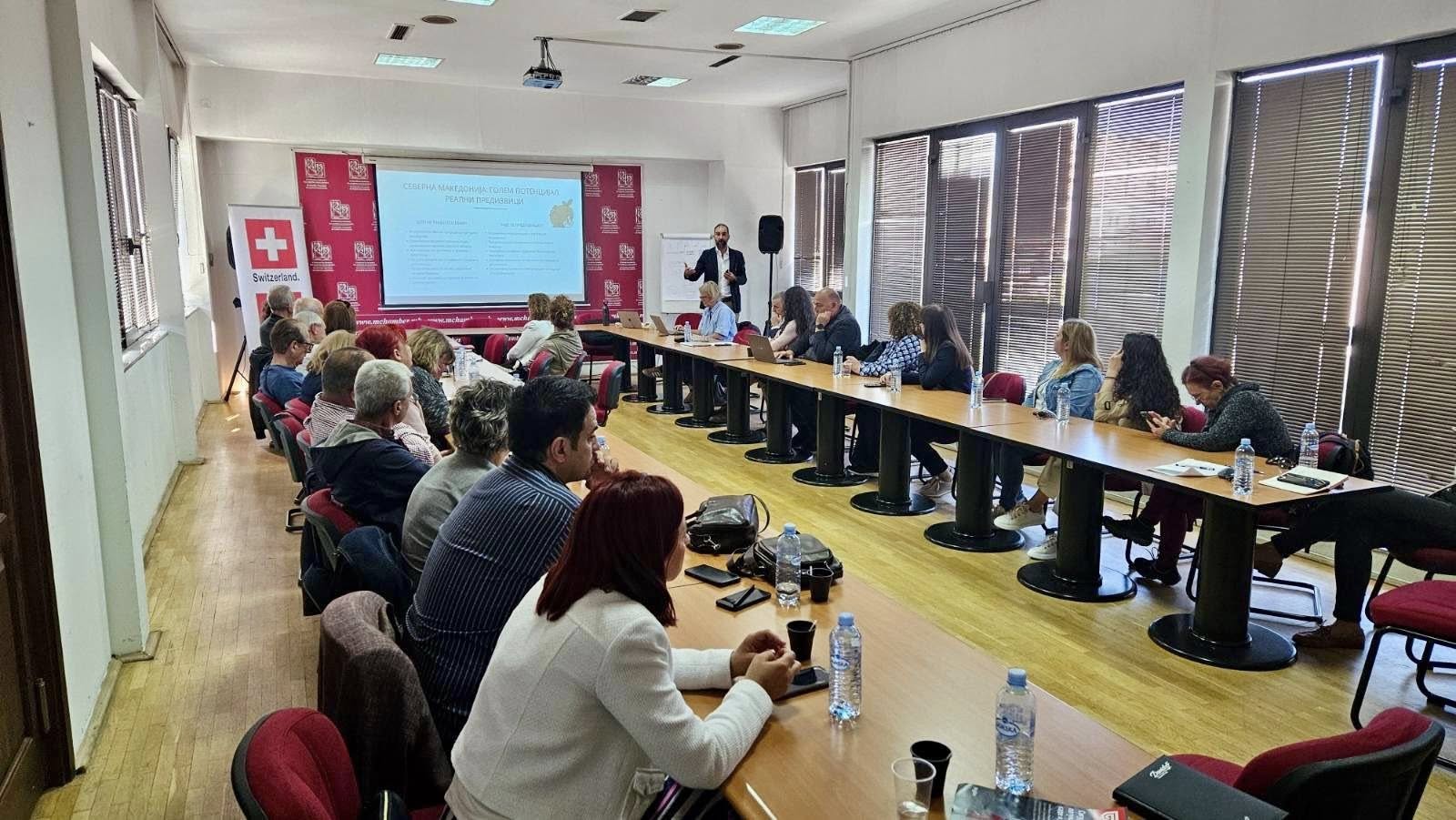
Organized by the Economic Chamber of North Macedonia and the National Inbound Tourism Association (NAITAM), a workshop was held on the topic: “Sustainable Tourism and EU Standards: The Path to Green Transformation.”
The workshop aimed to reaffirm the importance of a sustainable approach in tourism to ensure green transformation and enhance the competitiveness of destinations. It also sought to build capacities, raise awareness of sustainable tourism among participants, and provide guidance to the tourism sector in Macedonia to improve its readiness for new EU regulations on sustainability and certification.
Jana Apih, Director of Good Place and CEO of the Green Destinations Foundation, presented the success story of “Slovenia Green,” along with new EU sustainability requirements and regional developments in tourism.
Professor Sasho Korunovski spoke about the plan and timeline for the development of the National Tourism Strategy (2027–2032), emphasizing the importance of sustainability principles.
Aleksandar Donev from Mustseedonia, representative of Green Destinations in MK, discussed the development of certification in the Macedonian tourism sector, highlighting the examples of Vevchani and Krushevo.
Tourism in North Macedonia is increasingly recognized as a sector with significant potential for sustainable and export-oriented growth, relying on the country’s rich natural resources, cultural heritage, and authentic tourism experiences. However, despite the existence of certain sustainability-related practices, these have historically been unevenly understood, insufficiently communicated, and rarely linked to market positioning and international competitiveness.
At the institutional level, tourism stakeholders also face challenges in defining sustainability in practical terms and translating global concepts into actionable guidance for businesses. The Chamber emphasized the need for clearer frameworks and practical tools that would enable tourism operators to better understand sustainability requirements, credibly communicate their practices to international partners, and gradually align with recognized certification schemes.
The event was attended by experts, representatives of municipalities, and the private sector, and was supported by the Swiss programs SIPPO and IME (Increasing Market Employability).
.jpg)


 Progressive Academy