„Dimitrie Cupovski“ 13, 1000 Skopje +38923244000 ic@mchamber.mk
„Dimitrie Cupovski“ 13, 1000 Skopje +38923244000 ic@mchamber.mk
.jpg)
.jpg)
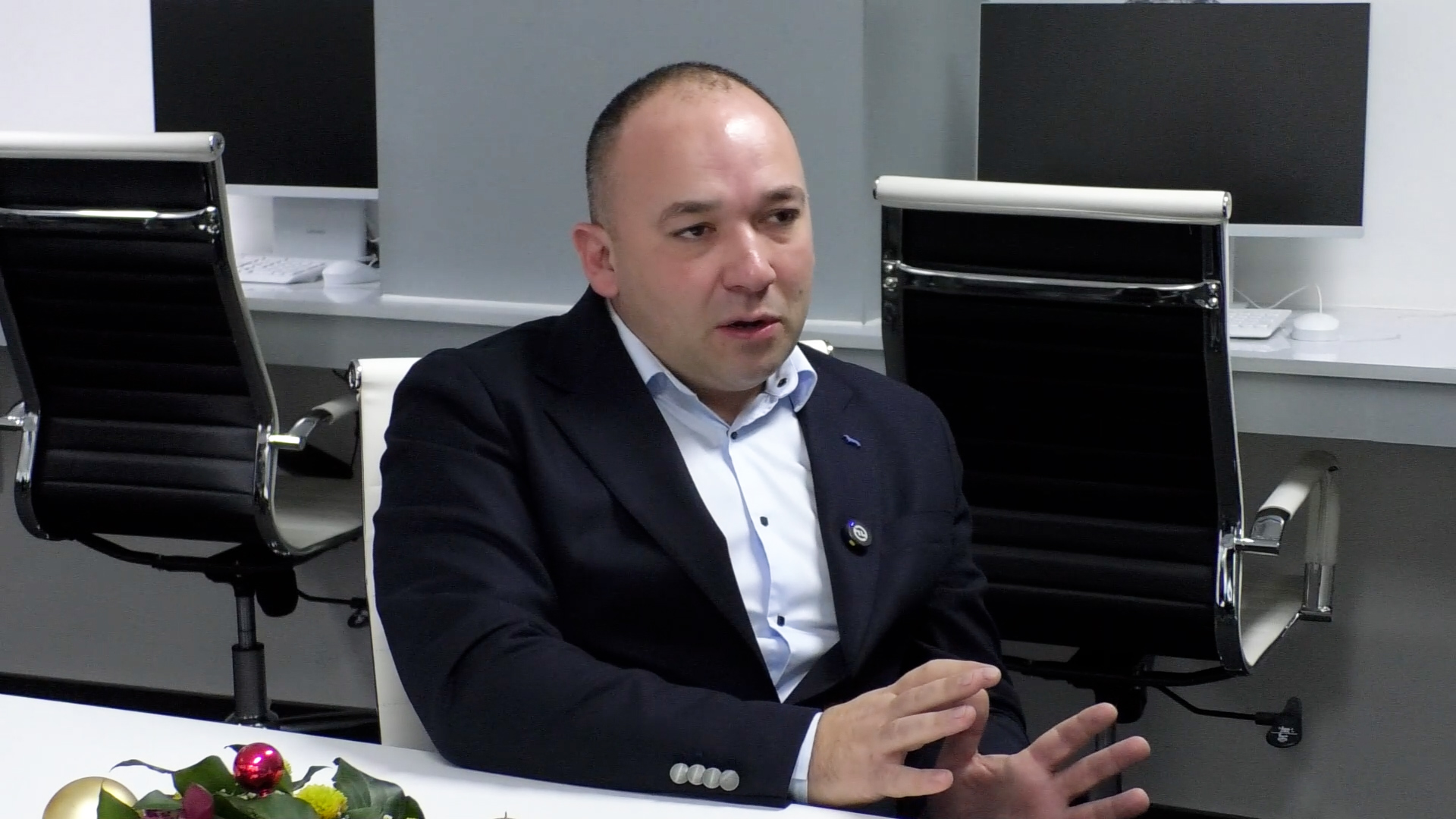
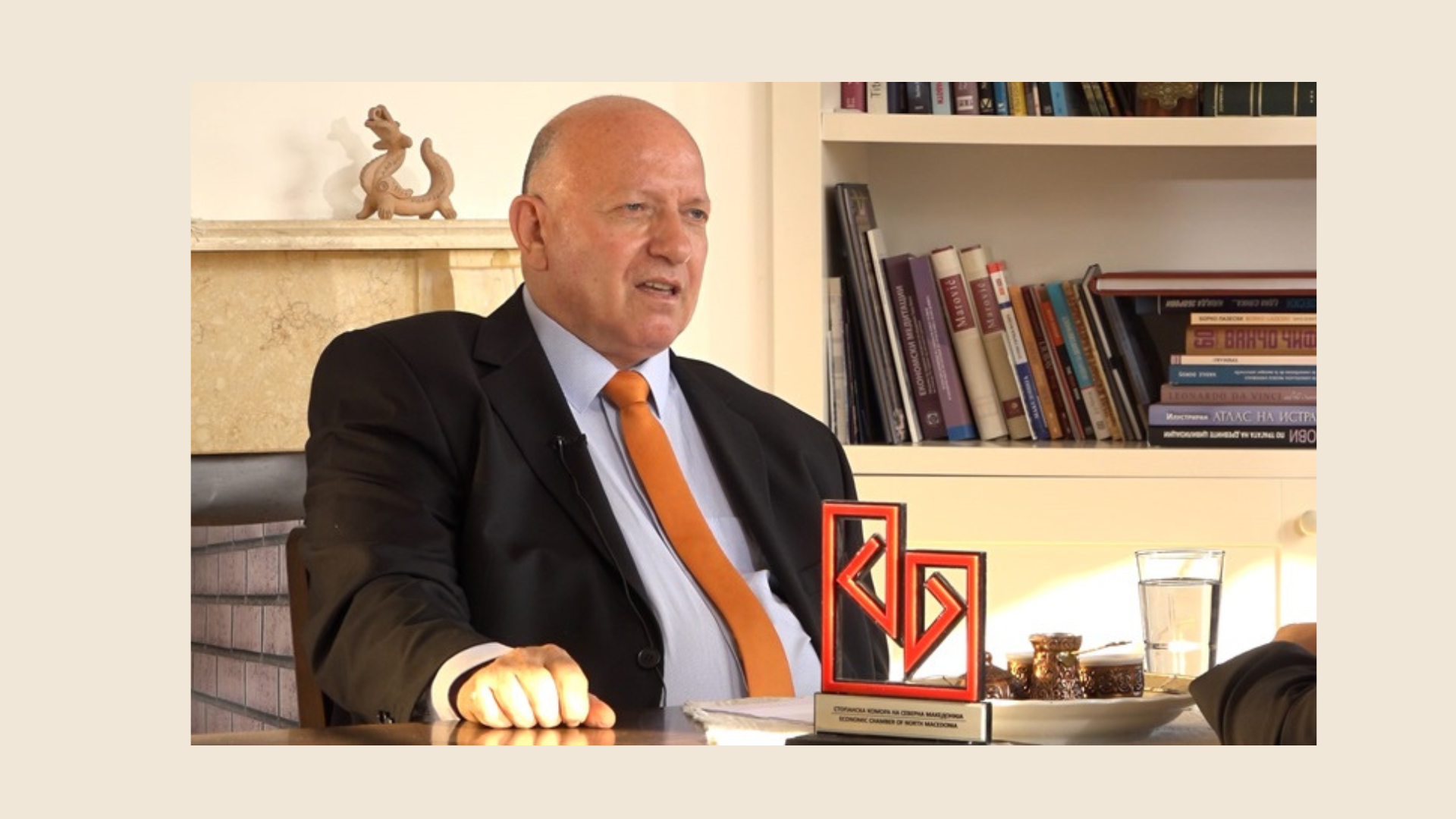
“It is an honor to be an active member of the Management Board of the Economic Chamber, which has definitively established the business climate in Macedonia,” said Zoran Ilievski, Chief Operating Officer and Business Development Manager of Aktiva DOO Shtip and member of the Management Board of the Economic Chamber, in the latest episode of the Business Club podcast with Branko Azeski.
According to Ilievski, the Economic Chamber is a key place where continuous efforts are being invested to improve the business climate in the country. He emphasized that the Management Board includes young people with a clear vision of Macedonia becoming a better place to live and work, but stressed that without the active involvement of all relevant stakeholders—aimed at improving education, healthcare, and the institutional system—these goals cannot be achieved.
“The Chamber’s work on the three development components is not possible without strong institutions and without cooperation with the education sector. Without regional cooperation, the search for regional markets, and without improving the export component, we cannot hope for economic growth and a better quality of life. We must focus on bringing foreign currency inflows into the country in order to be more secure and economically stronger,” Ilievski stated.
Speaking about the challenges facing the business community, Ilievski pointed out that one of the key problems is the lack of timely and substantive consultations with businesses when drafting and adopting legislation.
“The absence of long-term state policies, or the changes that occur without consulting the business community in the decision-making process, directly affect business plans and the investment cycles planned by a company,” he added, noting: “Business should be left to businesspeople to generate profit and value, while the state should assume the role of regulator.”
According to Ilievski, political structures always declaratively promote that they will support business, but in practice such support is limited.
“Political structures constantly emphasize that they will help business and that they will position Macedonia at a higher level through innovative and technological development, but over the past 15 or so years companies have charted their own paths. There is no direct involvement of the state in building up a company and helping it move to a higher level, especially when it comes to export-oriented companies,” Ilievski stated.
Reflecting on the quality of education, he emphasized that the knowledge and experience acquired at university helped him transition from a conventional way of operating toward the digitalization and automation of company processes. However, he stressed that formal education alone is not sufficient and that continuous investment in employee knowledge and skills is crucial for company growth.
“If there is no continuous training of staff and no monitoring of innovations and technologies, it is impossible to be well positioned or to be a partner on the supplier lists of companies that evaluate all aspects of a company’s operations.”
As part of his professional development, Ilievski completed the Executive Education Program at the Kellogg School of Management in Evanston, Illinois, USA, organized by Macedonia 2025.



 Progressive Academy